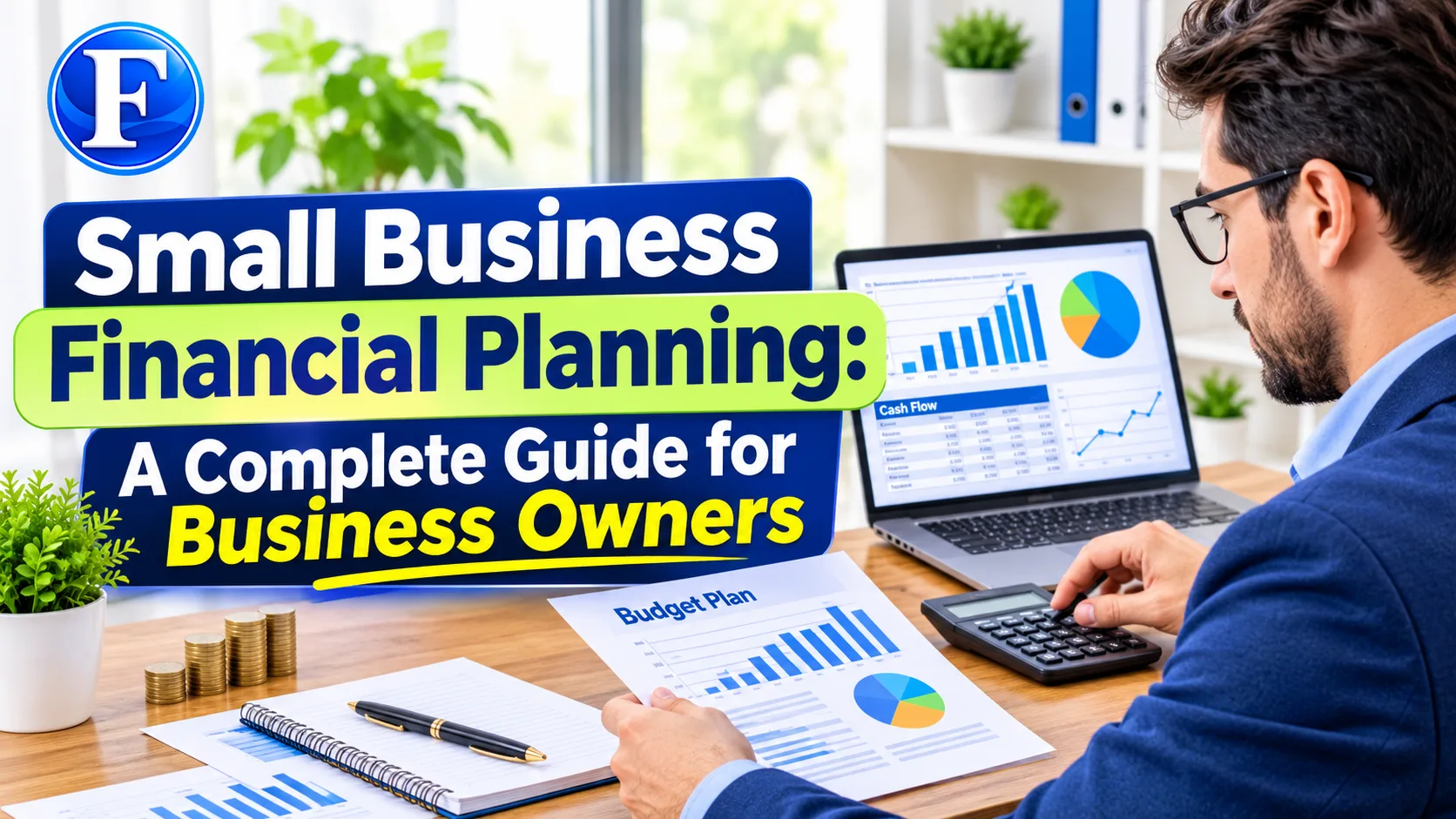
Small Business Financial Planning is essential for building a successful and financially stable company. It helps business owners manage their money, control expenses, and prepare for future challenges. Whether you are starting a new company or managing an established business, having a clear financial strategy can make a significant difference. Effective planning allows entrepreneurs to monitor business cash flow, estimate business startup costs, explore business funding options, and manage small business expenses.
It also helps identify financial risks, prepare for tax obligations, and make informed investment decisions. By understanding your financial position and setting realistic goals, you can improve profitability, maintain financial stability, and create a stronger foundation for long-term business growth.
1. What Is Small Business Financial Planning?
Small business financial planning is the process of organizing, forecasting, and managing a company’s financial resources to achieve short-term and long-term business objectives. It involves evaluating current financial conditions, estimating future revenue and expenses, and determining how available money should be allocated.
A financial plan helps business owners understand whether they have sufficient resources to cover daily operations, invest in growth, repay business loans, and handle unexpected financial challenges.
Unlike basic bookkeeping, which records completed financial transactions, business financial planning focuses on future financial decisions. It combines budgeting, financial forecasting, expense management, tax planning, and investment strategies into one organized approach.
What Does a Business Financial Plan Include?
A comprehensive financial plan generally covers the following areas:
- Revenue projections: Estimates of expected income from products, services, and other business activities.
- Business operating expenses: Regular costs such as rent, utilities, employee salaries, inventory, insurance, and marketing.
- Cash flow forecasts: Predictions of when money will enter and leave the business.
- Financial statements: Income statements, balance sheets, and cash flow statements that explain the company’s financial position.
- Funding requirements: Estimates of the capital needed to establish, operate, or expand the business.
- Business tax planning: Strategies for preparing for tax obligations and identifying eligible business tax deductions.
- Risk management: Plans for addressing financial risks, unexpected expenses, and potential business disruptions.
- Long-term financial goals: Strategies for expansion, employee retirement plans, asset protection, and business succession.
For example, a small retail business may prepare a financial plan to estimate inventory purchases, monthly sales, employee wages, rent, and marketing expenses. These estimates help the owner calculate how much revenue is necessary to cover operating costs and generate a profit.
A well-organized financial plan also provides a useful reference when evaluating new investments, considering business funding options, or discussing financial performance with business consultants and lenders.
2. Why Is Financial Planning Important for Small Businesses?
Managing small business finances without a clear financial strategy can create unnecessary problems. Even companies with strong sales may experience cash shortages, increasing debt, or difficulty meeting financial obligations.
Financial planning provides a structured way to manage money, evaluate performance, and prepare for future opportunities.
Improves Financial Decision-Making
Business owners regularly make decisions about hiring employees, purchasing equipment, adjusting prices, and investing in marketing.
Financial planning provides useful information for evaluating these decisions. Instead of relying entirely on assumptions, owners can compare expected costs with available resources and projected returns.
For example, before hiring additional employees, a business owner can calculate salary expenses, employment taxes, insurance costs, and other employee benefits packages. This makes it easier to determine whether the company can afford the additional workforce.
Supports Sustainable Business Growth
Business expansion requires financial resources. A growing company may need additional employees, larger facilities, more inventory, new equipment, or expanded marketing activities.
Financial projections help determine whether the business can afford these investments without putting existing operations at risk.
A financial plan can also help owners identify when additional funding is necessary and whether business loans, investor capital, or other financing arrangements are appropriate.
Helps Identify Business Financial Risks
Financial planning makes it easier to recognize potential problems before they become serious.
Common business financial risks include:
- Declining customer demand.
- Increasing supplier prices.
- Unexpected operating expenses.
- Delayed customer payments.
- Excessive borrowing.
- Equipment failures.
- Unexpected legal or insurance costs.
Identifying these risks early gives business owners more time to adjust their budgets, protect available cash, and develop contingency plans.
Provides Long-Term Financial Visibility
Financial planning helps entrepreneurs look beyond immediate business expenses and consider future priorities.
These may include:
- Building emergency cash reserves.
- Reducing outstanding business debt.
- Investing in new products or services.
- Expanding into additional markets.
- Establishing employee retirement plans.
- Preparing for business succession or ownership transfers.
This forward-looking approach helps business owners balance current financial responsibilities with future business and personal goals.
3. Key Components of a Small Business Financial Plan
A strong small business financial plan combines several financial documents, forecasts, and performance measurements. Each component provides a different perspective on the company’s financial health.
Understanding these components helps owners evaluate profitability, monitor financial obligations, and plan future investments.
Income Statement
An income statement, also called a profit and loss (P&L) statement, summarizes business revenue, expenses, and profits or losses over a specific period.
It generally includes:
- Total revenue from products or services.
- Cost of goods sold (COGS).
- Gross profit.
- Operating expenses.
- Interest and other applicable expenses.
- Net profit or loss.
For example, if a business generates $20,000 in monthly revenue and spends $14,000 on total expenses, its net profit is $6,000.
Reviewing this statement helps business owners understand whether their operations are profitable and where business operating expenses may need attention.
Cash Flow Statement
A cash flow statement tracks the actual movement of money into and out of a business.
It generally divides cash activity into three categories:
- Operating activities: Cash received from customers and payments for everyday business expenses.
- Investing activities: Purchases or sales of equipment, property, and other long-term assets.
- Financing activities: Money received from business loans, investments, and payments toward financing obligations.
A business can report a profit but still experience cash shortages if customers pay late or major expenses become due before expected payments arrive.
Monitoring business cash flow helps owners understand whether enough money is available to cover payroll, supplier invoices, rent, and other short-term obligations.
Balance Sheet
A balance sheet provides a snapshot of a company’s financial position at a specific date. It shows three major categories:
- Assets: Resources owned by the business, including cash, inventory, equipment, and accounts receivable.
- Liabilities: Financial obligations such as loans, unpaid bills, and other debts.
- Equity: The owner’s remaining financial interest in the business after liabilities are deducted from assets.
The basic accounting equation is:
Assets = Liabilities + Equity
For example, if a business has $80,000 in assets and $30,000 in liabilities, its owner’s equity is $50,000.
This statement helps owners understand what their business owns, what it owes, and how much equity remains.
Financial Projections and Key Metrics
Financial projections estimate future business performance using historical results, current conditions, and reasonable assumptions.
Useful financial metrics include:
- Gross profit margin.
- Net profit margin.
- Operating expense ratio.
- Current ratio.
- Accounts receivable turnover.
- Break-even point.
These measurements help business owners identify financial trends and determine whether their company is progressing toward its goals.
4. How to Create a Financial Plan for Your Small Business
Creating a financial plan does not have to be complicated. Small business owners can start with basic financial information and gradually develop more detailed projections.
Follow these steps to establish a practical financial planning process.
Step 1: Set Clear Business Financial Goals
Start by identifying what you want your business to achieve financially.
Your goals might include:
- Increasing annual revenue.
- Improving profit margins.
- Reducing outstanding debt.
- Building cash reserves.
- Purchasing new equipment.
- Expanding into another location.
Make your goals measurable and assign realistic deadlines. For example, instead of simply aiming to increase sales, establish a target of increasing monthly revenue by 15% within 12 months.
Step 2: Calculate Business Startup Costs and Operating Expenses
Identify the expenses required to establish and operate your business.
Business startup costs may include:
- Business registration and licensing.
- Equipment and furniture.
- Initial inventory.
- Website development.
- Initial marketing expenses.
- Professional and legal fees.
- Initial insurance premiums.
Recurring small business expenses may include:
- Rent and utilities.
- Employee salaries.
- Inventory purchases.
- Business insurance coverage.
- Software subscriptions.
- Marketing and advertising.
- Transportation and maintenance.
- Professional services.
Separating one-time startup costs from recurring operating expenses gives you a clearer picture of your total capital requirements.
The U.S. Small Business Administration (SBA) provides startup cost planning resources that can help entrepreneurs estimate their initial financial requirements.
Step 3: Develop Revenue and Expense Projections
Estimate how much revenue your business expects to generate and how much it will spend over the coming months.
Use available information such as:
- Previous sales performance.
- Current customer demand.
- Pricing structure.
- Seasonal sales patterns.
- Supplier costs.
- Expected changes in operating expenses.
For a new business without historical data, use reasonable assumptions based on market research and expected customer demand.
It is helpful to prepare three scenarios:
- Best-case scenario: Revenue grows faster than expected.
- Expected scenario: The business performs according to realistic estimates.
- Worst-case scenario: Sales decline or expenses increase unexpectedly.
This approach helps entrepreneurs prepare for different financial conditions instead of relying on one optimistic forecast.
Step 4: Calculate Your Break-Even Point
The break-even point is the level of sales at which total revenue equals total costs. At this point, the business neither makes a profit nor experiences a loss.
The basic formula is:
Break-Even Units = Fixed Costs / (Selling Price per Unit – Variable Cost per Unit)
For example, assume a small business has:
- Monthly fixed costs: $5,000.
- Selling price per product: $50.
- Variable cost per product: $30.
The contribution margin per product is $20.
5,000/(50 – $30) = 250 units
The business must sell 250 units per month to cover its fixed and variable costs.
Knowing this number helps business owners establish realistic sales targets, evaluate pricing decisions, and understand their minimum revenue requirements.
Step 5: Prepare for Unexpected Financial Challenges
Every business faces uncertainty. A major customer may stop placing orders, equipment may require expensive repairs, or sales may decline unexpectedly.
Include contingency plans in your financial strategy.
Consider:
- Maintaining emergency cash reserves.
- Identifying alternative suppliers.
- Reviewing insurance coverage.
- Reducing nonessential expenses when necessary.
- Establishing access to suitable financing.
Step 6: Review and Update Your Financial Plan
A financial plan should not remain unchanged after it is created.
Compare actual financial performance with your projections every month. If revenue, costs, or cash flow differ significantly from expectations, investigate the reasons and adjust your plan.
Regular financial reviews help ensure that your business strategy reflects current operating conditions rather than outdated assumptions.
5. How to Manage Your Business Budget and Cash Flow
Budgeting and cash flow management are essential parts of business financial planning. A budget helps control spending, while cash flow management ensures the business has enough available money to meet its financial obligations.
Even profitable businesses can experience financial difficulties when cash is unavailable at the right time.
Create a Realistic Business Budget
A business budget estimates expected revenue and expenses over a specific period, usually monthly or annually.
Start by reviewing previous financial records and identifying regular costs.
Organize your budget into categories such as:
| Budget category | Examples |
| Revenue | Product sales and service income |
| Fixed expenses | Rent, insurance, and salaries |
| Variable expenses | Inventory, packaging, and shipping |
| Marketing | Advertising and promotions |
| Financial obligations | Loan payments and interest |
| Savings | Emergency reserves and future investments |
Avoid building a budget around unrealistic sales expectations. Use conservative estimates, especially when your business is new or experiencing inconsistent demand.
Monitor Incoming and Outgoing Cash
Cash flow refers to the movement of money through your business.
To maintain healthy cash flow:
- Send customer invoices promptly.
- Follow up on overdue payments.
- Negotiate reasonable payment terms with suppliers.
- Monitor recurring expenses.
- Avoid unnecessary purchases.
- Review upcoming bills before making large investments.
A weekly cash flow review can help identify shortages before they affect payroll, supplier payments, or other essential operations.
Manage Accounts Receivable and Payable
Accounts receivable represents money customers owe your business. Accounts payable represents money your business owes suppliers and other creditors.
Poor management of either can create cash flow problems.
For example, if your business must pay suppliers within 30 days but customers regularly take 60 days to pay invoices, you may experience a cash shortage.
Consider offering clear payment terms, sending reminders, and reviewing outstanding invoices regularly.
Build More Predictable Revenue Streams
Recurring revenue can make financial forecasting easier.
Depending on your business model, you might consider:
- Monthly service subscriptions.
- Maintenance contracts.
- Retainer agreements.
- Membership programs.
- Repeat-purchase arrangements.
However, recurring revenue should be supported by reliable service delivery and customer retention. A subscription model does not automatically guarantee stable income.
Reduce Unnecessary Business Expenses
Review your business operating expenses regularly to identify costs that do not contribute enough value.
You may be able to reduce expenses by:
- Comparing supplier prices.
- Negotiating service contracts.
- Canceling unused software subscriptions.
- Improving inventory management.
- Reducing avoidable waste.
- Reviewing marketing campaign performance.
- Monitoring vehicle maintenance costs and transportation expenses.
For businesses that use vehicles, maintaining accurate records of business-related mileage and actual vehicle expenses can also support financial management and tax preparation.
The objective is not to cut every expense. It is to control spending without damaging product quality, customer experience, or business growth.
6. Maintain Accurate Financial Records and Statements
Accurate financial records help small business owners understand their company’s financial performance and prepare reliable financial statements.
They also provide supporting information for tax returns, financing applications, and important business decisions.
Separate Personal and Business Finances
One of the simplest ways to improve financial organization is to maintain separate personal and business accounts.
Mixing personal and business transactions makes it harder to calculate business expenses, understand profitability, and prepare tax returns.
Consider establishing:
- A dedicated business checking account.
- A separate business savings account.
- A business credit card, if appropriate.
- A consistent process for recording owner contributions and withdrawals.
The IRS recommends keeping separate business and personal accounts because doing so makes recordkeeping easier. Personal expenses generally cannot be deducted as business expenses.
Keep Accurate Bookkeeping Records
Record financial transactions consistently instead of waiting until tax season.
Your business expense tracking system should cover:
- Sales and customer payments.
- Supplier invoices.
- Business purchases.
- Payroll expenses.
- Loan payments.
- Inventory transactions.
- Equipment purchases.
- Bank deposits and withdrawals.
Maintain supporting documents such as receipts, invoices, canceled checks, and account statements.
For example, businesses that use vehicles for commercial activities should maintain appropriate records of business mileage, fuel, and vehicle maintenance costs. Depending on applicable IRS rules, eligible taxpayers may use the standard mileage allowance or actual vehicle expenses when calculating deductible vehicle costs.
Business travel expenses should also be documented, including their business purpose and relevant supporting receipts.
Review Financial Statements Regularly
Prepare and review your income statement, balance sheet, and cash flow statement at regular intervals.
Each document answers a different financial question:
- Income statement: Is the business profitable?
- Balance sheet: What does the business own and owe?
- Cash flow statement: Where is the business’s cash coming from and going?
Reviewing these statements together provides a more complete understanding of financial performance.
Use Accounting Software to Improve Accuracy
Accounting software can reduce manual work and help organize financial information.
Common options for small businesses include:
- QuickBooks.
- Xero.
- FreshBooks.
- Wave.
Depending on the product and subscription, these tools may offer invoicing, expense tracking, bank transaction management, financial reporting, and other bookkeeping features.
Choose software based on your business size, accounting requirements, budget, and compatibility with your existing systems.
7. Small Business Tax Planning Strategies
Business tax planning is an important part of managing finances in the United States. Business owners need to understand their tax responsibilities, maintain accurate records, and prepare for payments throughout the year.
Tax obligations depend on the business legal structure, income, location, and other circumstances.
Understand Federal and State Business Taxes
Different business structures have different tax treatment under US federal law.
Common business legal structures include:
- Sole proprietorship: A business owned by one individual without a separate legal entity. Business income and expenses are generally reported on the owner’s individual tax return.
- Business partnership: A business operated by two or more owners. Partnerships generally file informational returns, while partners report their allocated income and other tax items.
- Limited Liability Company (LLC): A legal business structure that may receive different federal tax classifications depending on elections and ownership.
- C corporations: Corporations generally pay federal income tax separately from their shareholders. Dividends may also be taxable to shareholders.
- S corporations: Eligible corporations that elect S corporation tax treatment generally pass income, losses, deductions, and credits through to shareholders, subject to applicable rules.
Depending on the business structure and activities, owners may need to account for:
- Federal income taxes.
- Self-employment taxes.
- Employment taxes.
- State income taxes.
- Sales and use taxes.
- Applicable local business taxes.
For example, self-employed individuals generally need to consider both income taxes and self-employment taxes. Businesses with employees may also have payroll withholding and employment tax responsibilities.
An LLC does not automatically have one specific federal tax treatment. Its classification depends on applicable IRS rules and any elections made by the owners.
Identify Eligible Business Tax Deductions
Eligible business tax deductions can reduce taxable income.
The IRS generally requires a deductible business expense to be both ordinary and necessary for the business.
Depending on the circumstances, potentially deductible expenses may include:
- Business rent.
- Employee wages.
- Advertising costs.
- Business insurance premiums.
- Professional and legal fees.
- Business-related supplies.
- Certain vehicle maintenance costs.
- Eligible business travel expenses.
- Business loan interest, subject to applicable limitations.
For vehicle-related deductions, eligible businesses may need to compare the standard mileage allowance with the actual expense method, depending on IRS requirements and their circumstances.
Not every expense qualifies automatically. Personal expenses are generally not deductible, and business owners should review applicable IRS rules before claiming deductions.
Plan for Quarterly Estimated Tax Payments
Many self-employed individuals and business owners must pay estimated taxes during the year rather than waiting until they file their annual tax return.
These payments may cover federal income tax and self-employment tax obligations.
Review your expected income, deductible expenses, and previous tax information to estimate how much you may owe.
Businesses with employees must also understand their payroll tax responsibilities, including applicable federal income tax withholding and employment taxes.
The IRS provides guidance and worksheets through its estimated tax resources.
Maintain Tax-Related Financial Records
Keep organized records throughout the year rather than trying to reconstruct transactions when filing taxes.
Important documents include:
- Sales records.
- Business receipts.
- Supplier invoices.
- Payroll documentation.
- Bank statements.
- Loan interest statements.
- Asset purchase records.
- Business mileage and travel documentation.
Good documentation makes it easier to prepare accurate tax returns and support reported deductions.
Work With Qualified Tax Professionals
A CPA or qualified tax professional can help evaluate business tax obligations, identify applicable deductions, and plan for major financial decisions.
Professional assistance can be particularly useful when:
- Starting a new business.
- Hiring employees.
- Changing business structures.
- Purchasing major equipment.
- Expanding into another state.
- Preparing for a business sale.
Because tax laws and individual circumstances vary, avoid relying on generic online advice for complex tax decisions.
8. Manage Business Debt, Funding, and Emergency Reserves
Access to capital can help a small business cover operating expenses, purchase equipment, manage seasonal demand, and finance expansion. However, borrowing without a repayment strategy can create unnecessary financial pressure.
A good financial plan should explain how the business will obtain funding, manage existing debt, and maintain enough cash to handle unexpected expenses.
Understand and Manage Business Debt
Business loans can support growth when used responsibly, but repayment obligations must fit within the company’s financial capacity.
Before taking out a loan, evaluate:
- Interest rates and additional fees.
- Repayment schedules.
- Loan duration.
- Collateral requirements.
- Potential effects on monthly cash flow.
- Whether projected business returns justify the borrowing cost.
Prioritize payments according to their interest costs, repayment terms, and financial consequences.
Avoid taking on additional debt simply to cover ongoing losses without understanding why the business is losing money.
Explore Different Business Funding Options
Small businesses can consider several funding sources depending on their financial position and eligibility.
Common business funding options include:
- Traditional bank loans: Financing provided by banks under agreed repayment terms.
- SBA-backed loans: Loans issued by participating lenders with a guarantee from the Small Business Administration.
- Business lines of credit: Flexible borrowing arrangements that allow businesses to access funds when needed.
- Equipment financing: Funding used to purchase machinery, vehicles, or other business equipment.
- Angel investors: Individuals who invest capital in businesses in exchange for ownership interests.
- Crowdfunding: Raising money from multiple contributors through online platforms.
Each option has different costs, eligibility requirements, and financial implications.
The Small Business Administration provides information about financing programs, including SBA-backed loan options. However, an SBA-backed loan is generally issued by a participating lender rather than directly by the SBA.
Compare the terms carefully before choosing a funding source.
Build an Emergency Fund
An emergency fund provides financial protection when unexpected expenses or revenue disruptions occur.
A business may need emergency savings to cover:
- Equipment breakdowns.
- Temporary sales declines.
- Unexpected repairs.
- Delayed customer payments.
- Emergency supplier replacements.
- Short-term operating disruptions.
There is no universal emergency fund amount that works for every business.
A common planning approach is to estimate several months of essential operating expenses and gradually build reserves based on business risks, revenue stability, and available cash.
Keep emergency savings accessible while avoiding unnecessary use for routine spending.
Maintain Adequate Working Capital
Working capital represents the difference between current assets and current liabilities.
Working Capital = Current Assets – Current Liabilities
For example, if a business has $30,000 in current assets and $18,000 in current liabilities, its working capital is $12,000.
Positive working capital can help the business meet short-term obligations, although the quality and availability of those assets also matter.
Regularly review inventory, customer payments, supplier balances, and upcoming expenses to avoid unnecessary pressure on working capital.
9. How to Protect Your Business from Financial Risks
Financial risks can affect businesses of every size. Unexpected expenses, customer defaults, legal disputes, economic changes, and operational disruptions can all create financial difficulties.
Risk management helps business owners identify potential threats and prepare appropriate responses.
Identify Potential Financial Risks
Start by reviewing the factors that could negatively affect your company’s finances.
Common risks include:
- Declining customer demand.
- Dependence on a small number of customers.
- Increasing supplier prices.
- Unexpected operating expenses.
- Late customer payments.
- Cybersecurity incidents.
- Equipment failures.
- Economic uncertainty.
Evaluate each risk based on its likelihood and potential financial impact.
For example, a business that depends heavily on one major customer faces a significant risk if that customer suddenly ends its contract.
Diversifying revenue sources can help reduce this dependence.
Choose Appropriate Business Insurance Coverage
Business insurance coverage can provide financial protection against certain covered losses.
Depending on the company’s operations, relevant policies may include:
- General liability insurance: Helps cover certain third-party bodily injury, property damage, and related claims.
- Property and casualty insurance: Provides coverage for certain physical property losses and other specified risks.
- Commercial property insurance: Protects covered business property, buildings, and equipment against specified losses.
- Workers’ compensation insurance: Provides benefits for qualifying employee work-related injuries or illnesses, subject to applicable state requirements.
- Professional liability insurance: Helps protect against certain claims involving professional services or advice.
- Business interruption insurance: May cover certain lost income and continuing operating expenses following a covered disruption.
- Disability income insurance: Can provide income protection when an insured person becomes unable to work due to a qualifying disability.
- Commercial umbrella policy: Provides additional liability limits above certain underlying insurance policies.
- Cyber liability insurance: Can help address certain financial losses and liabilities associated with covered cyber incidents.
Insurance premiums, coverage limits, exclusions, and eligibility requirements vary between policies.
Not every business needs every type of coverage. Review your operations and discuss suitable protection with a licensed insurance professional.
Understand Business Liability Protection
Your business legal structure can influence how personal and business liabilities are treated.
For example, a sole proprietorship generally does not create a separate legal entity between the owner and the business. This means the owner can generally be personally responsible for business debts and liabilities.
An LLC may provide business liability protection by separating certain personal and business liabilities under applicable law.
However, an LLC does not eliminate every form of personal responsibility. Personal guarantees, certain legal obligations, and improper separation of business and personal finances can affect available protection.
Business owners should evaluate their legal structure with an attorney or qualified professional before making important decisions.
Protect Business Assets and Financial Information
Business asset protection involves safeguarding important company resources against financial, legal, and operational threats.
Consider implementing:
- Strong passwords and multifactor authentication.
- Regular financial data backups.
- Restricted access to banking accounts.
- Secure payment processing systems.
- Written financial approval procedures.
- Regular bank statement reviews.
- Reliable contracts with customers and suppliers.
These practices can reduce the likelihood of fraud, unauthorized transactions, and preventable financial losses.
Prepare for Unexpected Financial Disruptions
Develop a contingency plan that explains how your business will respond to major financial challenges.
Your plan should identify:
- Essential expenses that must continue.
- Expenses that can temporarily be reduced.
- Available emergency reserves.
- Alternative suppliers and service providers.
- Suitable financing options.
- Important contacts, including accountants, insurers, and legal professionals.
A business that prepares for disruptions is generally better positioned to respond without making rushed financial decisions.
10. Long-Term Financial Planning for Small Business Owners
Small business financial planning should extend beyond daily operations and immediate profitability.
Entrepreneurs also need to consider how their businesses will grow, how they will prepare for retirement, and what will happen when they eventually leave the company.
A long-term strategy helps connect current financial decisions with future personal and professional goals.
Plan for Business Growth and Expansion
Growth can create new opportunities, but it also requires additional financial resources.
Before expanding, evaluate:
- Expected customer demand.
- Additional hiring costs.
- Equipment and inventory requirements.
- Marketing expenses.
- Facility and operational costs.
- Potential changes in cash flow.
- Expected return on investment.
Compare projected financial benefits with the total investment required.
Avoid expanding simply because sales have increased. Make sure your business has the financial capacity and operational resources to support additional activity.
Create a Retirement Savings Strategy
Many business owners spend years reinvesting money into their companies without building sufficient personal retirement savings.
This can become a problem if most of their personal wealth is tied to a business they cannot easily sell.
Depending on eligibility and individual circumstances, US business owners may explore several self-employed retirement plans and employer-sponsored options.
Common retirement arrangements include:
- Individual 401(k): A retirement plan designed for eligible self-employed individuals and owner-only businesses.
- SEP IRA: A Simplified Employee Pension plan that allows eligible employers to contribute to retirement accounts for themselves and eligible employees.
- SIMPLE IRA: A retirement savings arrangement for eligible small employers that involves employer and employee contributions.
- Keogh plan: A historical term for certain qualified retirement plans available to eligible self-employed individuals and businesses. Current plan rules and alternatives should be reviewed with a retirement professional.
The appropriate plan depends on business structure, employee numbers, contribution preferences, and applicable IRS requirements.
Consider Employee Retirement Plans and Benefits
Businesses with employees may consider offering employee retirement plans as part of their overall compensation strategy.
Depending on the company’s size and circumstances, retirement and employee benefits packages may include:
- Employer-sponsored 401(k) plans.
- SIMPLE IRA arrangements.
- SEP IRA contributions.
- Employee health insurance.
- Dental and vision coverage.
- Life insurance.
- Disability income insurance.
These benefits may help attract and retain qualified employees while supporting their financial well-being.
However, employers should evaluate contribution costs, administrative responsibilities, eligibility rules, and applicable federal and state requirements before establishing a benefits program.
Develop a Business Succession Plan
A succession plan explains how ownership and management responsibilities will transfer when an owner retires, becomes unable to operate the business, or decides to leave.
Without a clear succession strategy, businesses may face operational disruption, ownership disagreements, and financial uncertainty.
A succession plan should consider:
- Identifying potential successors.
- Preparing future management.
- Establishing ownership transfer arrangements.
- Determining business valuation.
- Reviewing relevant legal agreements.
- Planning for applicable tax consequences.
Starting early gives business owners more time to prepare successors and establish an orderly transition.
Prepare for a Business Sale or Exit
Some entrepreneurs eventually decide to sell their businesses rather than transfer ownership to family members or existing partners.
Preparing for an exit involves more than finding a potential buyer.
Important considerations include:
- Maintaining accurate financial statements.
- Reviewing outstanding liabilities.
- Evaluating business assets.
- Understanding the company’s market value.
- Organizing contracts and legal documents.
- Identifying potential buyers.
- Consulting legal, tax, and financial professionals.
A well-prepared business with organized records and a clear financial history may be easier for potential buyers to evaluate.
Know When to Hire a Financial Advisor
Managing business finances independently may be practical during the early stages. However, financial decisions become more complicated as a company grows.
A financial advisor, accountant, or other qualified business consultants may help with:
- Financial projections.
- Cash flow analysis.
- Retirement planning.
- Business valuation.
- Tax strategy.
- Funding decisions.
- Succession and exit planning.
Choose professionals whose experience matches your business needs. Understand their fees, services, qualifications, and potential conflicts of interest before engaging them.
Conclusion
Small business financial planning is an ongoing process that helps entrepreneurs manage their money, control expenses, prepare for financial challenges, and make better business decisions.
From creating a realistic budget and monitoring business cash flow to managing business tax deductions, exploring business funding options, and selecting appropriate business insurance coverage, every financial decision contributes to the company’s long-term stability.
The most effective approach is to start with a clear financial plan, maintain accurate records, and regularly compare actual performance with your financial goals.
You do not need a complicated financial system to get started. Focus on understanding your numbers, managing available resources, and making informed decisions as your business grows.
Take the first step today: Review your current income, expenses, debts, and cash reserves. Use that information to build a financial plan that supports your business today while preparing it for tomorrow.
FAQs
1. What is the 50/30/20 rule for business?
It is a budgeting guideline that allocates 50% of income to essential expenses, 30% to business growth or flexible spending, and 20% to savings or debt repayment.
2. What business makes $10,000 a month?
Businesses such as digital marketing agencies, consulting services, e-commerce stores, and software companies can generate $10,000 monthly with the right strategy and customers.
3. How do I create a financial plan for starting a small business?
Estimate startup costs, forecast revenue and expenses, set a budget, plan your funding, and prepare cash flow projections to guide your business decisions.
4. Is it true that 82% of small businesses fail due to cash flow problems?
This widely cited statistic comes from a U.S. Bank study, but its original research methodology and accuracy are debated, so it should not be treated as a definitive fact.
5. How do I create a financial plan for starting a small business?
Start by defining financial goals, calculating startup expenses, estimating monthly income, planning funding, and setting aside emergency reserves.
Disclaimer: This article is for informational and educational purposes only and should not be considered financial, tax, legal, or investment advice. Financial decisions should be based on your individual circumstances and, where appropriate, consultation with qualified professionals.