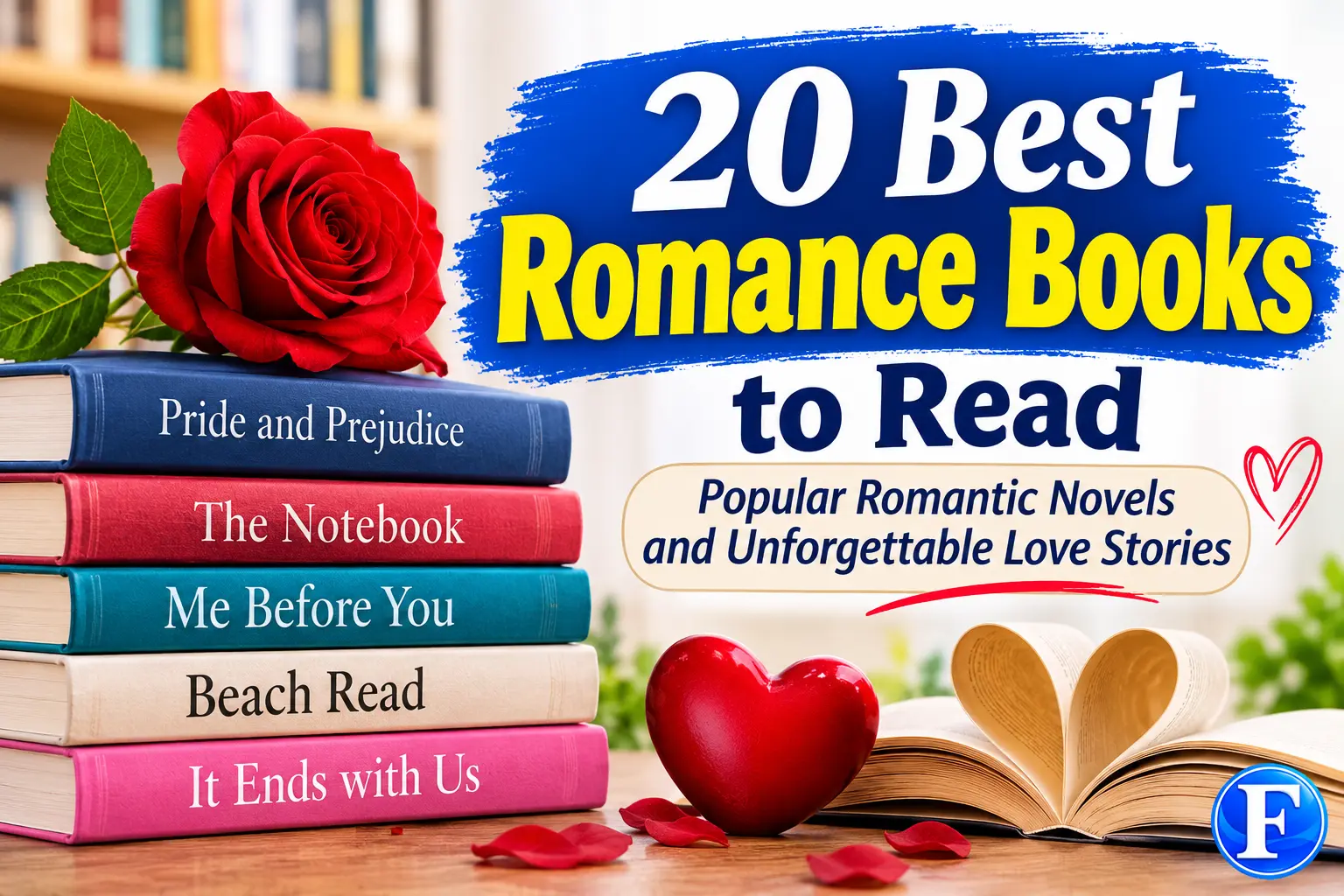
Romance books have a special way of bringing readers into stories filled with love, emotional connections, personal challenges, and unforgettable relationships. From timeless literary classics to modern romantic fiction, the genre offers something for readers with different interests and reading preferences.
Whether you enjoy slow-burn relationships, enemies-to-lovers stories, historical settings, emotional journeys, or lighthearted romantic comedies, there are plenty of novels worth exploring.
In this guide, we explore 20 popular romance books, including their authors, story themes, and what makes each title worth considering. The selection includes different romance styles rather than claiming to represent an objectively ranked list.
20 Best Romance Books to Add to Your Reading List
1. Pride and Prejudice by Jane Austen
Pride and Prejudice is one of the most recognized romantic novels in English literature. The story follows Elizabeth Bennet and Mr. Darcy as they navigate misunderstandings, social expectations, personal judgments, and developing feelings.
Jane Austen combines romance with humor and observations about society and relationships. Readers who enjoy intelligent dialogue, classic literature, and gradual romantic development may appreciate this novel.
Best for: Readers who enjoy classic romance and witty storytelling.
2. Jane Eyre by Charlotte Brontë
Jane Eyre follows an independent young woman who experiences hardship while building a life based on personal values and self-respect. Her relationship with Edward Rochester becomes an important part of the story.
The novel combines romance, mystery, personal development, and Gothic elements. It also explores independence, emotional strength, and social expectations.
Best for: Readers interested in classic romance with mystery and emotional depth.
3. The Notebook by Nicholas Sparks
The Notebook tells the story of Noah and Allie, two people whose relationship develops despite differences in their backgrounds and circumstances.
The novel explores lasting affection, memories, commitment, and the challenges that relationships can face over time. Its emotional storytelling makes it a recognizable choice among contemporary romantic fiction.
Best for: Readers who enjoy emotional love stories.
4. Me Before You by Jojo Moyes
Me Before You follows Louisa Clark, a young woman who takes a job caring for Will Traynor, a man whose life has changed following an accident.
As their connection develops, both characters encounter difficult questions about independence, personal choices, and the meaning of life.
This novel combines relationship development with serious emotional themes. It is not a conventional happy-ending romance.
Best for: Readers who appreciate emotionally complex relationship stories.
5. The Hating Game by Sally Thorne
The Hating Game is a contemporary romantic comedy about Lucy Hutton and Joshua Templeman, two colleagues working in the same office.
Their competitive relationship involves teasing, workplace rivalry, and unexpected romantic tension. The novel uses the enemies-to-lovers storyline to explore how first impressions can change.
Best for: Fans of workplace romance and humorous fiction.
6. Beach Read by Emily Henry
Beach Read follows January Andrews and Augustus Everett, two writers with different approaches to storytelling who find themselves working on creative challenges together.
Their writing experiment leads to conversations about relationships, creativity, personal experiences, and emotional vulnerability.
The novel combines humor, romance, and thoughtful character development.
Best for: Readers who enjoy contemporary romance with meaningful character journeys.
7. Book Lovers by Emily Henry
Book Lovers centers on Nora Stephens, a literary agent whose professional life takes an unexpected turn during a trip to a small town.
There, she repeatedly encounters Charlie Lastra, a book editor with whom she shares a complicated professional relationship.
The story explores ambition, family connections, romantic expectations, and the importance of understanding people beyond their public image.
Best for: Readers who enjoy literary references and enemies-to-lovers romance.
8. People We Meet on Vacation by Emily Henry
People We Meet on Vacation follows Poppy Wright and Alex Nilsen, two friends who have traveled together over several years.
Their friendship becomes more complicated as past experiences and unspoken feelings influence their relationship.
The novel moves between different vacations, gradually revealing how their connection changes over time.
Best for: Fans of friends-to-lovers stories and travel-themed romance.
9. The Love Hypothesis by Ali Hazelwood
The Love Hypothesis is a contemporary romantic comedy set in an academic research environment.
It follows Olive Smith, a PhD student who enters a pretend relationship with Adam Carlsen, a demanding professor. What begins as an arrangement gradually develops into something more complicated.
The novel combines academic settings, humor, romantic tension, and personal growth.
Best for: Readers interested in fake-dating romance and academic settings.
10. The Kiss Quotient by Helen Hoang
The Kiss Quotient introduces Stella Lane, a successful professional who approaches relationships through a practical and analytical perspective.
She hires Michael Phan to help her become more comfortable with romantic and social interactions. Their arrangement develops into an unexpected emotional connection.
The book explores communication, vulnerability, relationships, and different ways of experiencing love.
Best for: Readers interested in character-driven contemporary romance.
11. Red, White & Royal Blue by Casey McQuiston
Red, White & Royal Blue follows Alex Claremont-Diaz, the son of the US president, and Prince Henry of Wales.
After an initially difficult relationship, the two develop a connection that grows into a romance complicated by public attention, political expectations, and personal identity.
The novel combines humor, romance, and political settings.
Best for: Readers interested in LGBTQ+ romance and contemporary romantic comedy.
12. Outlander by Diana Gabaldon
Outlander combines historical fiction, romance, adventure, and time travel.
The story follows Claire Randall, a former wartime nurse who unexpectedly travels from 1945 to eighteenth-century Scotland. There, she encounters Jamie Fraser and becomes involved in an unfamiliar world.
The novel offers a detailed historical setting alongside a developing relationship and adventurous storyline.
Best for: Readers who enjoy historical romance, adventure, and time-travel fiction.
13. Persuasion by Jane Austen
Persuasion follows Anne Elliot, a woman who reconnects with Frederick Wentworth, a man she once loved but was persuaded to reject.
Years later, their circumstances have changed, and they must confront their past decisions and unresolved feelings.
The novel explores second chances, regret, maturity, and enduring affection.
Best for: Readers who enjoy mature characters and second-chance romance.
14. Wuthering Heights by Emily Brontë
Wuthering Heights is a Gothic novel centered on the complicated relationship between Catherine Earnshaw and Heathcliff.
Its themes include obsession, revenge, social class, family conflict, and destructive emotional attachments.
Although frequently discussed alongside classic romance literature, it is a dark and tragic story rather than a traditional love story.
Best for: Readers interested in Gothic literature and complex relationships.
15. The Fault in Our Stars by John Green
The Fault in Our Stars follows Hazel Grace Lancaster and Augustus Waters, two teenagers who meet at a support group.
Their relationship develops through shared experiences, conversations, humor, and reflections on life.
The novel explores love, mortality, friendship, and the emotional experiences of young people.
Best for: Young adult readers and those interested in emotional contemporary fiction.
16. The Time Traveler’s Wife by Audrey Niffenegger
The Time Traveler’s Wife tells the story of Henry DeTamble, a man who experiences involuntary time travel, and Clare Abshire, the woman whose life becomes connected to his.
The unusual structure of their relationship creates challenges involving timing, distance, uncertainty, and commitment.
The novel blends romance, speculative fiction, and family themes.
Best for: Readers who enjoy unconventional love stories and science fiction elements.
17. The Duke and I by Julia Quinn
The Duke and I is the first novel in Julia Quinn’s Bridgerton series.
It follows Daphne Bridgerton and Simon Basset, the Duke of Hastings, as they enter a pretend courtship arrangement that becomes increasingly complicated.
Set in Regency-era England, the novel features family relationships, social expectations, and romantic misunderstandings.
Best for: Readers who enjoy historical romance and Regency-era settings.
18. Love in the Time of Cholera by Gabriel García Márquez
Love in the Time of Cholera explores the long-lasting feelings of Florentino Ariza for Fermina Daza.
Their relationship develops across many decades, examining love, aging, memory, social expectations, and the passage of time.
Gabriel García Márquez combines literary storytelling with reflections on human relationships.
Best for: Readers who appreciate literary fiction and unconventional explorations of love.
19. It Ends with Us by Colleen Hoover
It Ends with Us follows Lily Bloom as she navigates a complicated romantic relationship and reflects on experiences from her past.
The story addresses difficult subjects involving relationships, family history, personal boundaries, and domestic abuse.
It is important to recognize that this novel includes emotionally challenging material and is not simply a lighthearted romance.
Best for: Readers interested in contemporary relationship fiction and difficult personal choices.
20. Seven Husbands of Evelyn Hugo by Taylor Jenkins Reid
The Seven Husbands of Evelyn Hugo follows an aging Hollywood actress who shares the story of her life and relationships with an inexperienced journalist.
The narrative explores fame, ambition, identity, personal sacrifices, and complicated love.
Although it contains important romantic themes, it is primarily a work of historical fiction and literary drama rather than a conventional romance novel.
Best for: Readers interested in celebrity fiction, complex relationships, and character-driven storytelling.
How to Choose the Best Romance Books for Your Reading Preferences
Not every romance novel offers the same experience. Some focus on humor and attraction, while others explore personal struggles, historical settings, or emotional relationships.
Consider these factors before choosing your next book.
1. Decide Which Romance Style You Enjoy
Different romance subgenres offer different storytelling experiences:
- Contemporary romance: Modern relationships and everyday experiences.
- Historical romance: Love stories set in earlier periods.
- Romantic comedy: Humor, misunderstandings, and developing relationships.
- Young adult romance: Relationships and emotional experiences involving younger characters.
- Gothic romance: Darker settings, mystery, and complicated relationships.
- Fantasy romance: Romantic storylines combined with imaginative worlds.
2. Consider the Story’s Emotional Tone
Some novels are lighthearted and entertaining, while others explore grief, difficult decisions, and complicated family relationships.
If you prefer uplifting stories, look for romantic comedies and lighter contemporary fiction. If you enjoy emotional storytelling, consider novels with more complex characters and relationship challenges.
3. Check the Book’s Length and Writing Style
A shorter novel may be suitable for casual reading, while longer books can offer more detailed character development and world-building.
You may also want to read a sample chapter before purchasing a book to see whether its writing style matches your preferences.
4. Read About Content Before Choosing
Romance novels can include sensitive subjects such as grief, abuse, violence, and emotional trauma.
Reading a book description or content advisory can help you decide whether a particular story is appropriate for your preferences.
Frequently Asked Questions About Romance Books
What are the best romance books to read?
Popular choices include Pride and Prejudice by Jane Austen, The Notebook by Nicholas Sparks, Beach Read by Emily Henry, Book Lovers by Emily Henry, and The Hating Game by Sally Thorne. The best choice depends on your preferred writing style and romance subgenre.
Which romance books are good for beginners?
Readers new to romance fiction might consider The Hating Game, Beach Read, The Notebook, or Pride and Prejudice. These novels introduce different approaches to romantic storytelling.
What are the most popular romance book tropes?
Some widely recognized romance tropes include:
- Enemies to lovers
- Friends to lovers
- Second-chance romance
- Fake dating
- Slow-burn romance
- Opposites attract
- Forbidden love
These storytelling patterns help create different types of romantic tension and character development.
Are classic romance books still worth reading?
Yes. Classic novels such as Pride and Prejudice, Persuasion, and Jane Eyre continue to attract readers because of their memorable characters, literary themes, and explorations of relationships.
What is the difference between romance and romantic fiction?
Romance is a genre in which a developing romantic relationship is central to the story. Romantic fiction can be broader, combining relationship themes with literary drama, historical fiction, mystery, or other genres.
Final Thoughts
The best romance books offer more than romantic moments. They introduce memorable characters, explore personal relationships, and provide different perspectives on love, commitment, and human connection.
From Jane Austen’s timeless classics to Emily Henry’s contemporary romantic comedies, the 20 books in this guide represent a variety of storytelling styles.
Whether you prefer historical settings, emotional journeys, humorous relationships, or unconventional love stories, choosing a book that matches your interests can make your next reading experience more enjoyable.
Editorial note: Book descriptions in this guide are intended to provide general reading information. Readers should check the publisher’s description and content information before choosing a title.
Disclaimer: This article is for general literary and entertainment information. Book preferences are subjective, and inclusion in this guide does not represent an official ranking or endorsement by the authors or publishers.