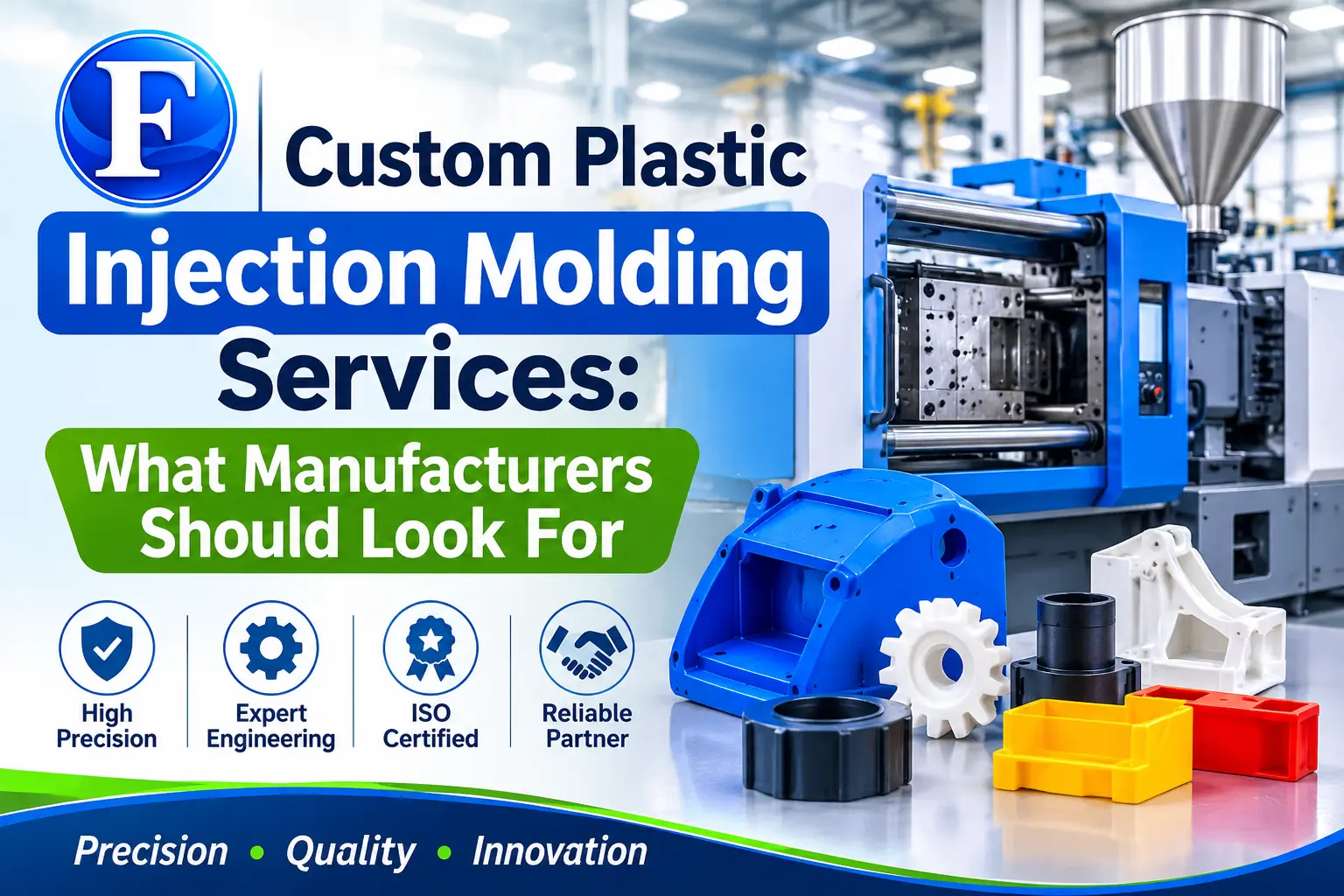
From medical device housings to aerospace components and consumer electronics enclosures, custom plastic injection molding plays an important role in manufacturing products used across many industries. Choosing the right plastic injection molding company can make a significant difference in a component’s accuracy, durability, and overall performance.
plastic injection molding company is an ISO 9001:2015 certified company with 50 years of experience providing high-precision injection molding, overmolding, and insert molding solutions for industries such as aerospace, medical, and electronics. The company also supports customers with mold design, material selection, prototype development, forensic failure analysis, and secondary operations to help produce durable, accurate, and high-quality plastic components.
What Is Custom Plastic Injection Molding?
Custom plastic injection molding is a manufacturing process used to produce plastic components in specific shapes, sizes, and designs. The process involves heating thermoplastic material until it melts, injecting it into a precisely designed mold, and allowing it to cool and solidify before the finished component is removed.
This manufacturing method is widely used because it can produce complex parts with consistent dimensions and repeatable quality. It is particularly useful for businesses that require large production volumes, detailed designs, or components that must meet specific performance requirements.
Unlike standard plastic components, custom molded parts are designed around the requirements of a particular product or application. Working with an experienced plastic injection molding manufacturer can help businesses evaluate their designs, materials, tooling requirements, and production processes before manufacturing begins.
Key Injection Molding Capabilities to Consider
When selecting a manufacturing partner, it is important to understand the different molding capabilities available and how they can support a project’s requirements.
High-Precision Plastic Injection Molding
High-precision injection molding is essential for components that require accurate dimensions, consistent quality, and reliable performance. Parts used in aerospace, electronics, and medical applications may require tighter tolerances and careful process control.
Precision depends on several factors, including mold design, material properties, machine performance, and production consistency. A manufacturer with suitable engineering expertise and quality-control processes can help address these requirements.
Overmolding and Insert Molding
Overmolding involves molding one material over another component, often combining rigid plastic with a softer material to improve grip, cushioning, sealing, or functionality.
Insert molding is another specialized process in which metal or other inserts are placed inside a mold before plastic is injected around them. This approach can integrate multiple components into a single molded part, potentially reducing assembly requirements and improving product consistency.
Both processes are useful for products that require multiple materials or integrated components.
Secondary Manufacturing Operations
Some plastic components require additional work after the molding process is complete. Secondary operations may include finishing, assembly, machining, inspection, or other processing steps depending on the product design.
Having these services available through one manufacturing partner may help reduce production handoffs, simplify project coordination, and maintain consistency throughout the manufacturing process.
How Engineering Support Improves Manufacturing Projects
Engineering support is an important part of custom plastic injection molding. Experienced manufacturing teams can help identify potential design or material challenges before they become costly production problems.
Mold Design and Optimization
Mold design directly influences part quality, production efficiency, and tooling performance. Factors such as wall thickness, gate placement, cooling channels, and material flow can affect how a plastic component forms during the molding process.
Reviewing these design considerations early can help manufacturers improve production efficiency and reduce the risk of unnecessary tooling changes.
Material Selection
Selecting the appropriate plastic material depends on the component’s intended use, operating environment, strength requirements, temperature exposure, chemical resistance, and other application-specific factors.
Engineering guidance can help businesses evaluate suitable materials and understand how their properties may affect the finished product.
Prototype Development
Prototypes allow manufacturers and product designers to evaluate a component before investing in full production tooling. They can help identify dimensional issues, assess functionality, and make design adjustments during the early stages of development.
Testing a prototype may reduce the likelihood of unexpected problems during production.
Forensic Failure Analysis
When a plastic component cracks, warps, wears out, or fails to perform as expected, forensic failure analysis can help investigate the underlying cause.
Failure analysis may examine material properties, component design, manufacturing conditions, tooling, and environmental factors. Identifying the source of a problem can help manufacturers make more informed corrective decisions.
Custom Plastic Injection Molding for Different Industries
Plastic injection molding supports a wide range of manufacturing applications. Different industries have their own technical requirements, material considerations, and quality expectations.
Aerospace Manufacturing
Aerospace applications may require plastic components that meet specific requirements for dimensional consistency, durability, material performance, and traceability. Manufacturing processes must be carefully evaluated according to the intended application and applicable industry requirements.
Electronics Manufacturing
Electronic products commonly use molded plastic housings, connectors, protective enclosures, and other components. Precision molding can help produce parts that fit correctly, protect internal components, and support consistent product assembly.
Medical Manufacturing
Medical manufacturing requires careful consideration of materials, manufacturing processes, documentation, and quality requirements. Companies researching medical plastic injection molding companies may evaluate manufacturing experience, quality management systems, technical capabilities, and the ability to meet project-specific requirements.
The appropriate manufacturing partner depends on the component’s intended use, specifications, and applicable regulatory or quality requirements.
Why Quality Certification and Manufacturing Experience Matter
Quality management systems and manufacturing experience can provide useful insights when evaluating a plastic injection molding provider.
ISO 9001:2015 is an internationally recognized quality management system standard. Certification indicates that an organization has been assessed against the standard’s requirements for its quality management system. However, certification alone does not guarantee that every component or project will meet a buyer’s specific requirements.
Manufacturing experience can also be valuable because it helps companies understand common tooling challenges, material behavior, production considerations, and potential design improvements. A knowledgeable engineering team may be better equipped to identify issues and provide practical guidance throughout a project.
Questions to Ask Before Choosing a Plastic Injection Molding Manufacturer
Before selecting a custom plastic injection molding provider, businesses can consider asking the following questions:
- Does the manufacturer support mold design, prototyping, and production?
- Can it help identify suitable materials for the intended application?
- What quality certifications or quality management systems does it maintain?
- Does it offer overmolding, insert molding, and secondary operations?
- How does it investigate and address manufacturing or component failures?
- Does it have experience producing components for the relevant industry?
- Can it explain its production processes and quality-control procedures?
These questions can help buyers better understand a manufacturer’s capabilities and determine whether its services align with their project requirements.
Conclusion
Custom plastic injection molding is an important manufacturing process for producing precise, durable, and application-specific plastic components. Choosing the right manufacturing partner involves evaluating technical capabilities, material knowledge, engineering support, quality processes, and relevant industry experience.
From mold design and prototype development to high-precision molding and secondary operations, a capable manufacturer can support different stages of a product’s development and production. Carefully evaluating these factors can help businesses make more informed decisions and establish manufacturing partnerships that support consistent product quality and reliable production.